Edges and Parapets
Coping caps, wall cracks, and counterflashing terminations let water in above the roof line. Stains near an outside wall send us here before the field membrane.

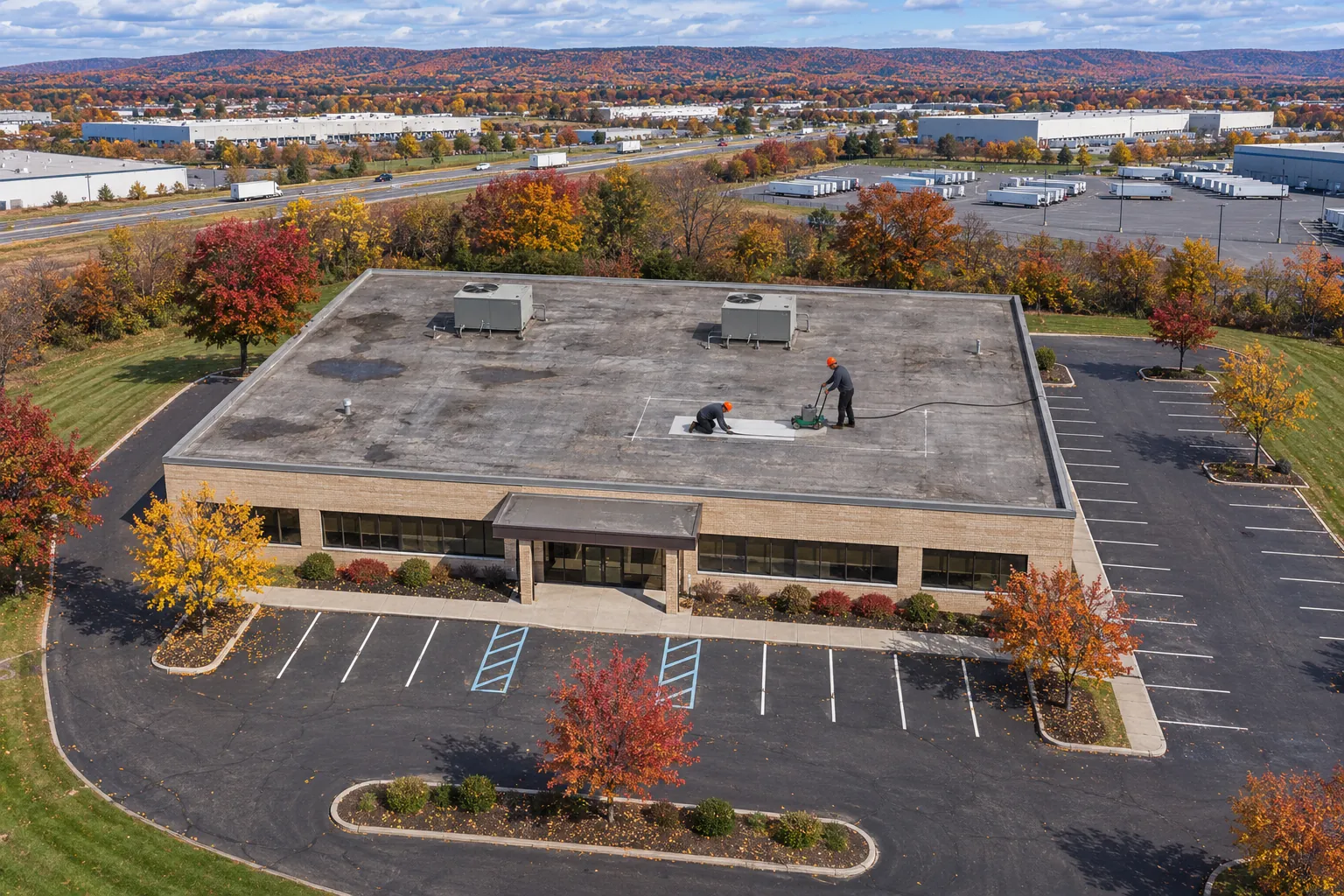
As an Allentown commercial roof repair contractor, we fix leaks, seams, drains, and flashing on flat and metal roofs over working buildings.
Our Allentown commercial roof repair work falls into four services, each matched to the roof system and the building below it. Use the arrows to step through them.
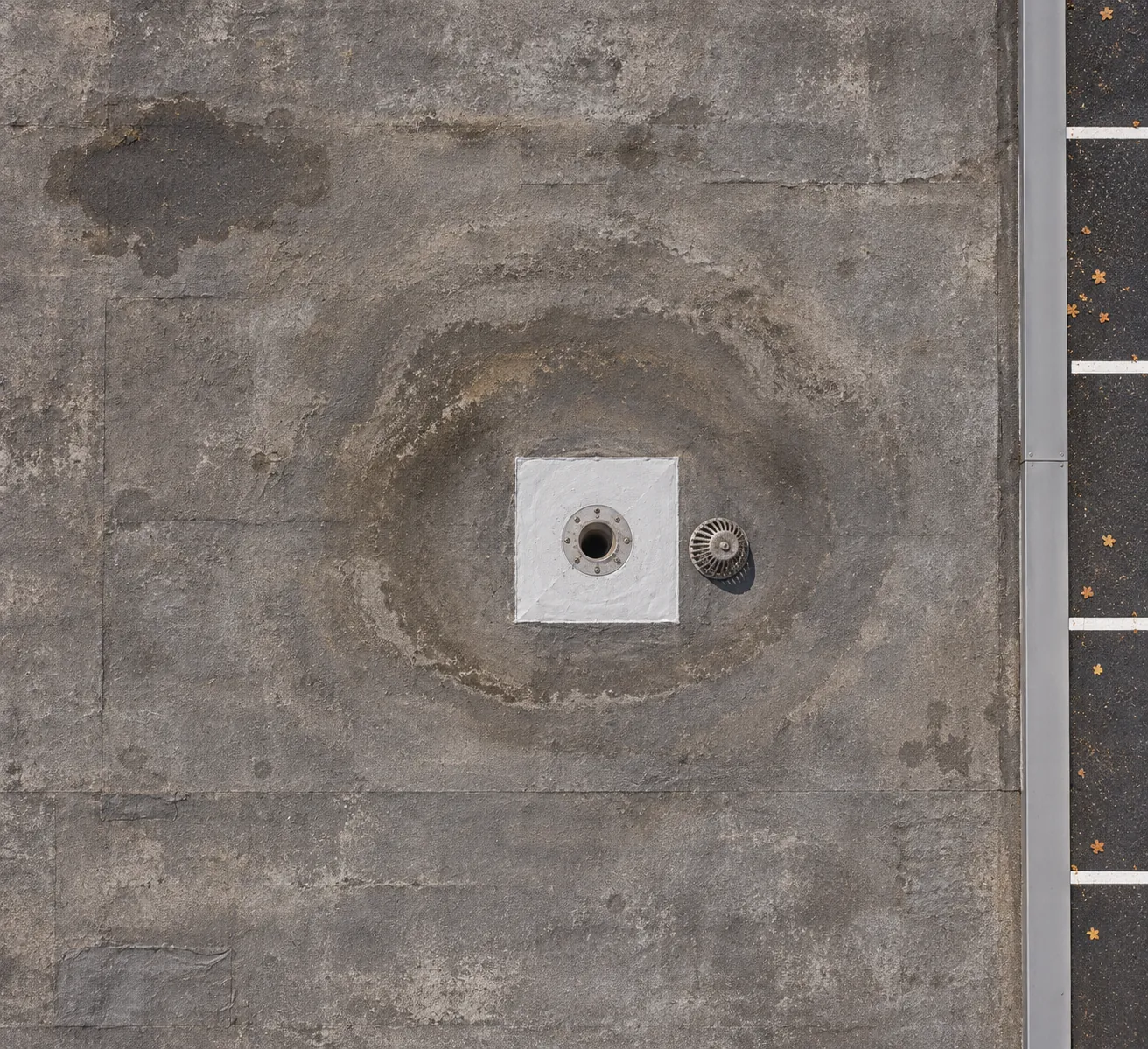
Membrane and built-up roofs on warehouses, offices, and strip centers. We repair split seams, blisters, drain bowls, and wet insulation found by core cuts, then tie new material into firm edges.
Best For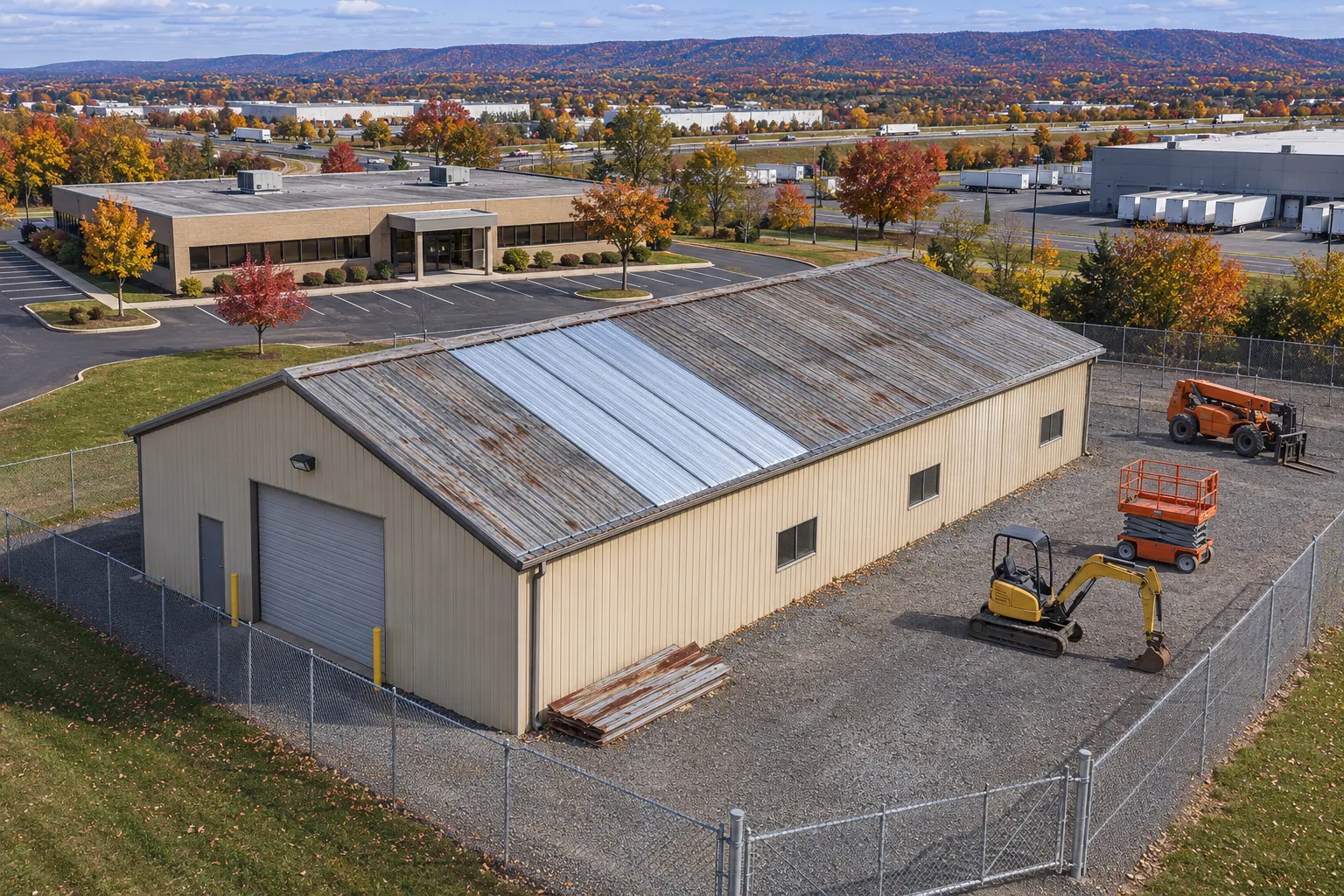
Exposed-fastener and standing-seam roofs on shops and plants. Repairs cover loose screws, opened laps, rusted panels, and pipe flashings that pull away as the panels move.
Best For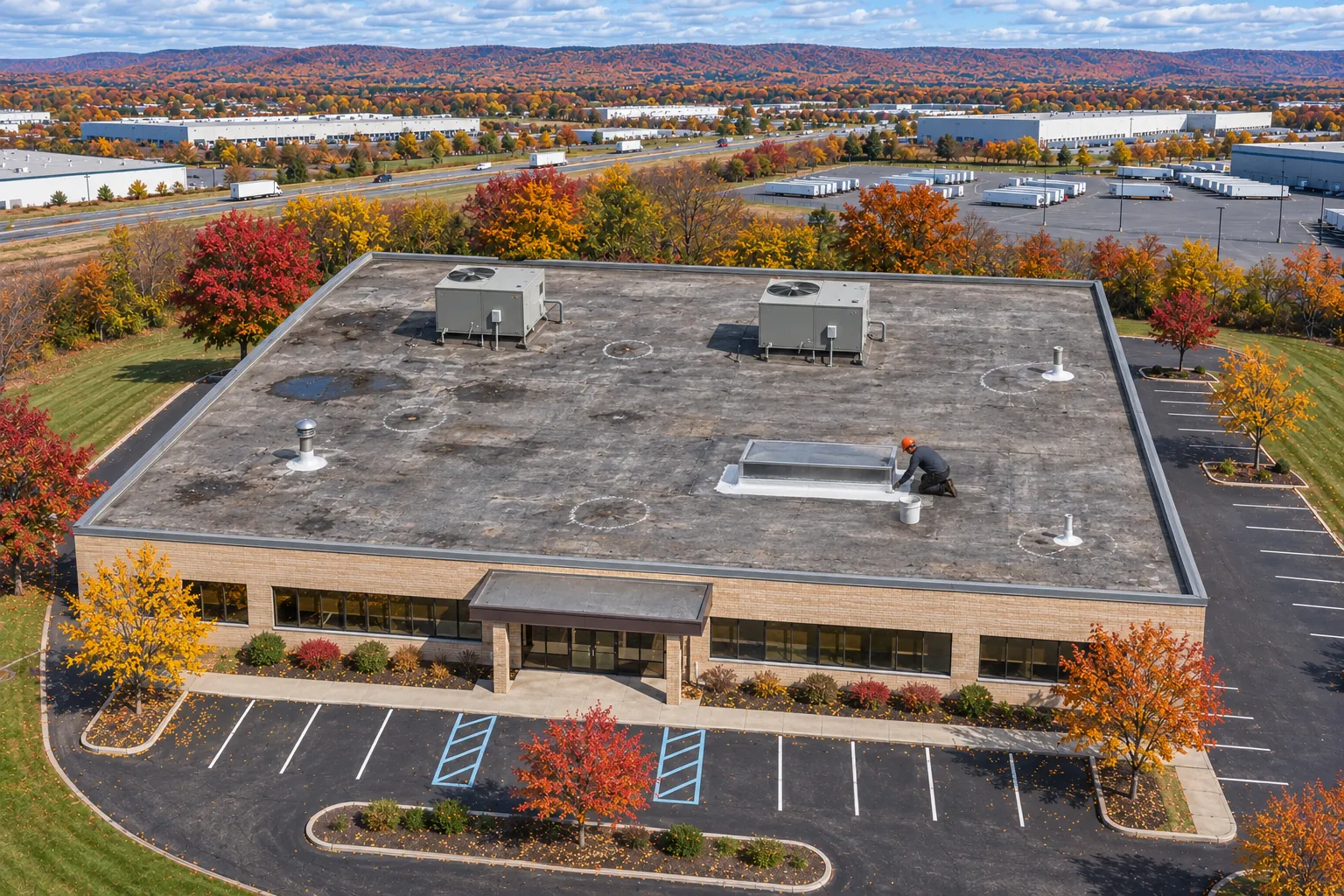
Active leaks over offices, stores, and warehouses. Tracing comes first: interior marks, rain timing, snowmelt, and parapet coping are compared before any opening gets sealed.
Best For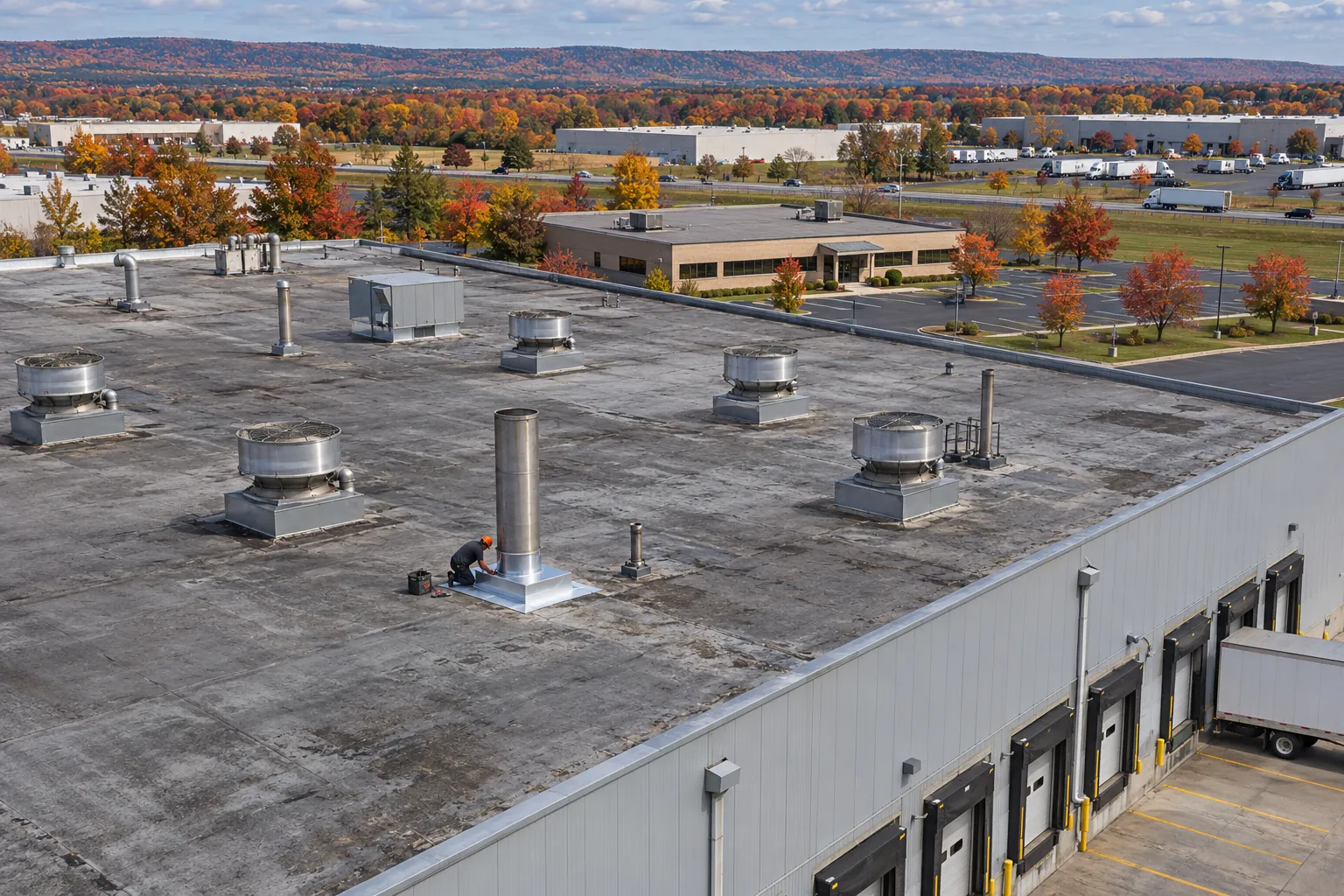
Plant and processing roofs with fans, stacks, and curbs. Repairs are planned around the production floor, equipment shutdowns, and safe access before work starts.
Best ForMost leaks we trace on Lehigh Valley commercial roofs start in one of these areas, so each visit walks all five.
Coping caps, wall cracks, and counterflashing terminations let water in above the roof line. Stains near an outside wall send us here before the field membrane.
Lap seams, old patch edges, blisters, and foot-traffic scuffs across the open roof. Ridges and soft spots underfoot point to trapped moisture between layers.
Drain bowls, clamping rings, scuppers, and gutters that freeze or clog. Ponding rings and debris lines show where water sits after rain or snowmelt.
Rooftop unit curbs, pipe boots, exhaust stacks, and skylights. Sealant applied over sealant around a curb usually marks an earlier leak that came back.
Wet insulation and rusted deck under the membrane spread a leak sideways. Core cuts and a moisture survey set the true size of the repair area.
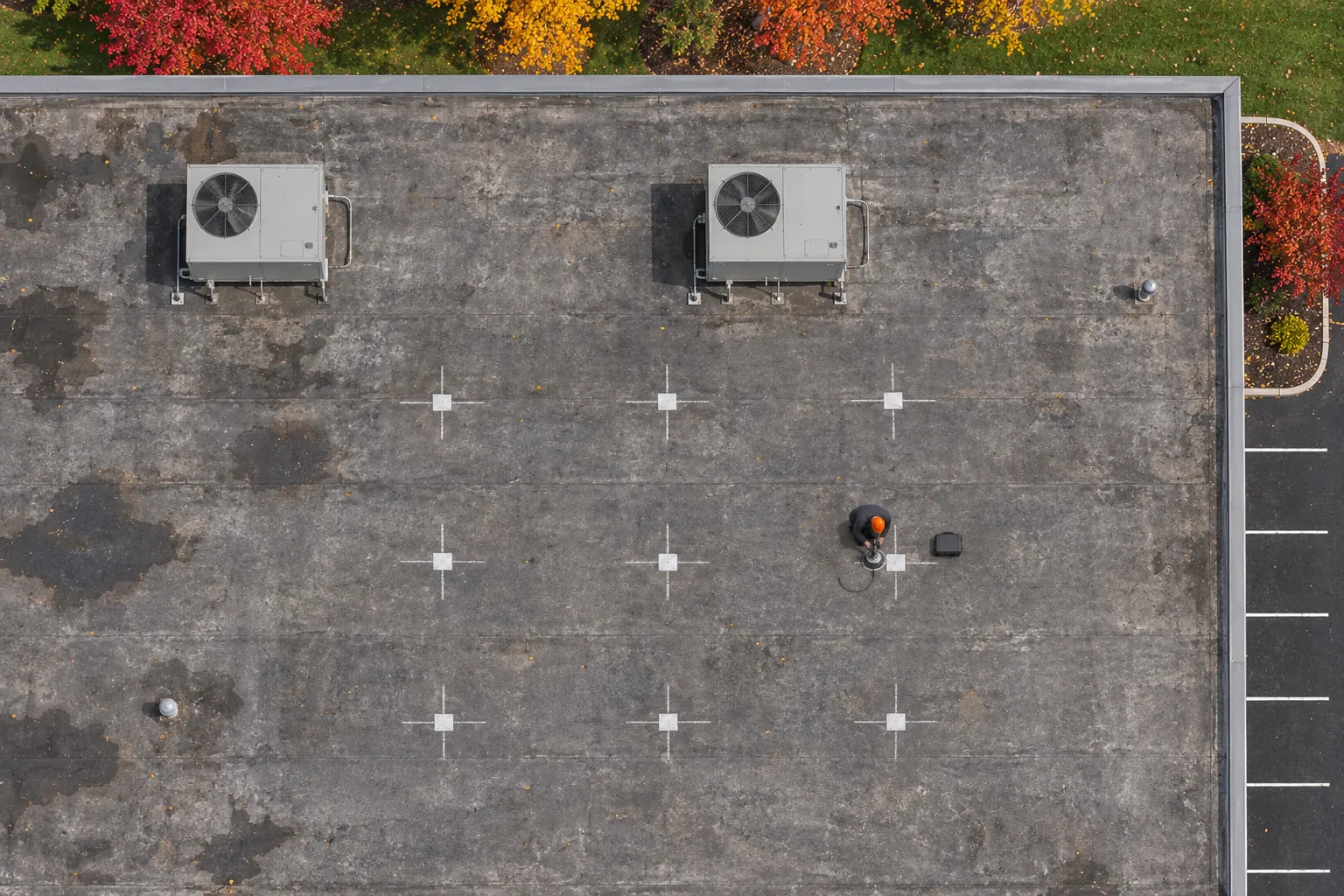
Large warehouse roofs rarely fail everywhere at once. Fixing the failed sections keeps the rest of the roof working.
Repairs stay inside the bays where seams, drains, or flashing failed, so racking and dock traffic below keep moving while the crew works overhead.
Core cuts separate wet boards from dry ones. Only the soaked insulation comes out, and the dry areas stay in place under the existing membrane.
Each repair is photographed and marked on a roof sketch. Owners and tenants can check the same record when the next storm or lease question comes up.
If wet areas keep spreading from section to section, the report says so plainly, with the locations that point toward a section replacement.
Pick the option that matches your building today.
Call with the building address and where the water shows up. We set up interior protection and safe roof access before anyone climbs.
Call UsSend the address and a short description of the roof. We schedule an inspection and give you a written repair scope.
Schedule Free InspectionStart from what you see on the roof. These four situations come up most on Allentown commercial buildings.
A single entry point with dry surroundings is a short repair at that detail.
Punctures, split seams, and loosened flashing get repaired once the damage is mapped.
Soaked boards and the membrane above them come out and get replaced in that section.
When core cuts show wet layers bay after bay, patching keeps chasing new leaks.
Each repair follows the same four stages. Tap a stage to read what happens on the roof.
Walk all five roof zones, photograph defects, and mark each one on a roof sketch. Interior stains are matched to roof features above them so the repair starts at the actual entry point.
Core cuts and moisture readings show how far water has traveled in the insulation. Rain and snowmelt timing helps separate a roof leak from a unit, wall, or condensation problem.
Seams are welded or patched with matching material, drains reset, flashings rebuilt, and wet insulation replaced. New work ties into firm roof edges around the repair area.
Repaired seams get probed, drains get flow-checked, and the area is photographed again. You receive the before and after photos with the marked sketch.
We repair commercial roofs in Allentown, Emmaus, Northampton, Conshohocken, Quakertown, and Souderton.
Outside these towns? Call us or send us a message.
Short answers to the questions building owners ask most before a repair starts.
That depends on the lease. Its maintenance, repair, and notice clauses decide who authorizes and pays for the work. We document the damage and the repair needed so the owner and the tenant can check those clauses before anyone assumes the occupant is responsible.
Yes, when the roof around it is firm and the new material can tie into it cleanly. On a distribution center we check for moisture past the reported leak and look at drains, roof levels, and equipment before setting the repair edges.
You should get the defects found, the likely water path, and the reasons for the repair area we propose. Photos and marked locations tie each finding to the building, and any concealed condition we could not confirm is listed as open, with the extra testing it needs.
Often, yes. We check punctures, seams, flashings, and attachment to separate repairable damage from wider failure, and we note older wear apart from storm damage. Insurance coverage rests on your policy and the cause of loss.
The damaged roof covering, what gets removed, and any work on the supports below it. Pennsylvania uses the Pennsylvania Uniform Construction Code. We bring the investigated scope to the reviewing office, since a phrase like small leak repair says little about what will be disturbed.
Send the building address and what you are seeing inside. We inspect the roof, trace the leak, and repair the failed detail.